

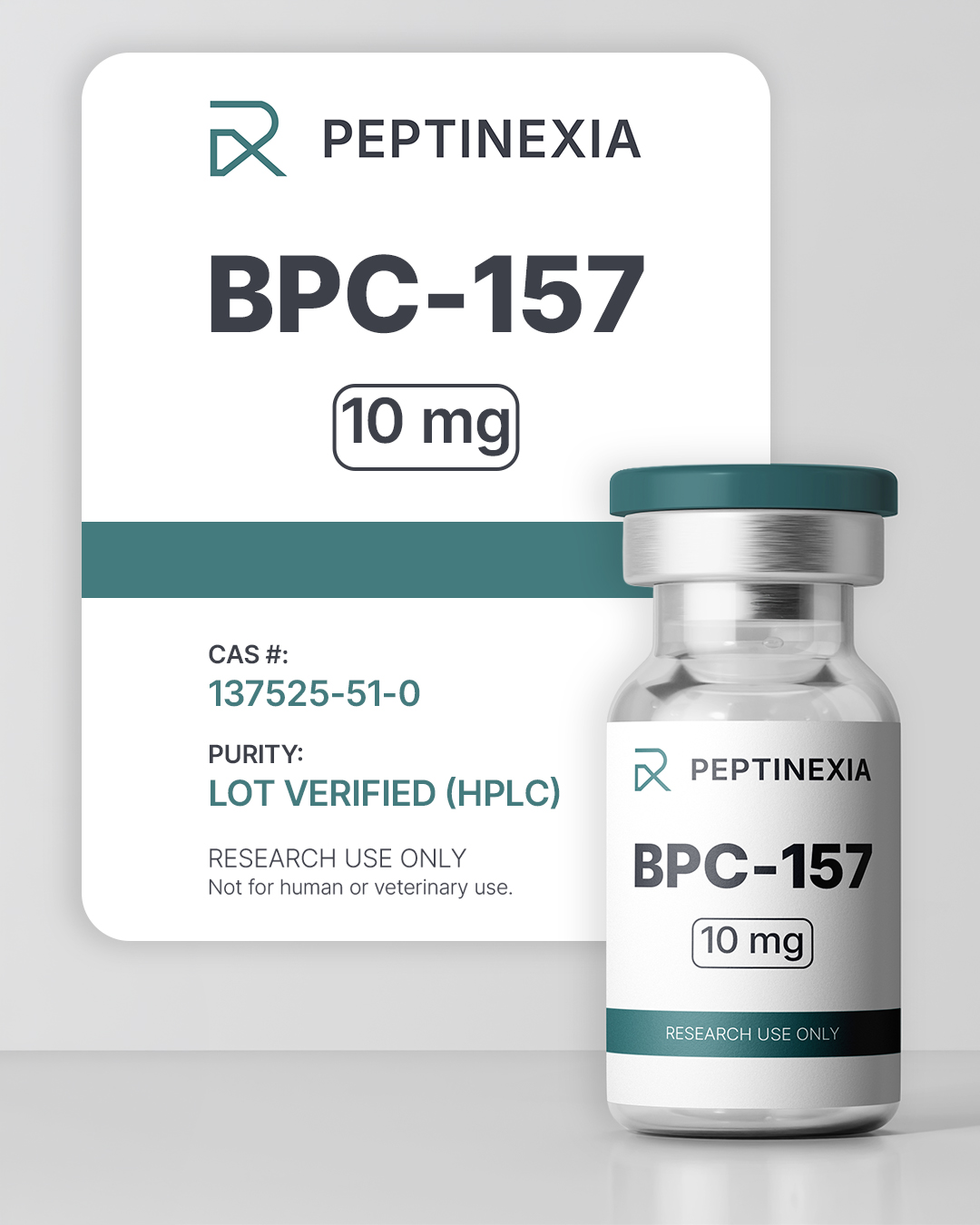
BPC-157

BPC-157 is a synthetic pentadecapeptide studied for its role in cellular signaling, vascular responses, and tissue repair mechanisms in preclinical research models.

$40.00

What is BPC-157?
BPC-157 (Body Protection Compound-157) is a synthetic pentadecapeptide derived from a naturally occurring protein fragment originally identified in gastric tissue. The peptide has attracted scientific interest due to its unusual stability in biological environments and its broad range of observed biological activity in preclinical research models.

Research Interest
BPC-157 has been investigated primarily in laboratory and animal studies exploring biological processes related to tissue repair and cellular signaling. Areas of ongoing research interest include connective tissue responses, vascular signaling pathways, angiogenesis, gastrointestinal tissue protection, and mechanisms associated with inflammatory and nitric oxide regulation.

Mechanisms Under Investigation
Published studies suggest that BPC-157 may interact with multiple signaling systems studied in preclinical models, including growth-factor receptor activity, endothelial nitric oxide pathways, and vascular endothelial growth factor (VEGF) signaling. Researchers have also examined its influence on cellular migration, collagen organization, and blood-vessel dynamics within experimental injury and healing models.

Current State of Research
Most available research involving BPC-157 has been conducted in vitro or in animal models. While these studies provide insight into potential biological mechanisms, controlled human clinical data remain limited, and investigation into the peptide’s properties is ongoing.
Lot IDPurityNet ContentEndotoxinSterility
BPC010031626199.5 %12.3 mg (122.9 %)17.8 EU/vial
Content
10 mg
Lot Size
100 vials
Purity
99.5 %
Net Content
12.3 mg (122.9 %)
Endotoxin
17.8 EU/vial
Sterility

Lyophilized (Dry Powder) — Unopened Vials
Unopened lyophilized vials should be stored away from direct light and heat. For use within a few weeks, room temperature storage is acceptable. For storage over several months, refrigeration at 2–8°C (36–46°F) is recommended. For long-term storage, freezing best preserves peptide integrity.

When removing a vial from frozen storage, allow it to reach room temperature before opening to prevent condensation from introducing moisture into the vial.

Reconstitution
Reconstitute using bacteriostatic water (BAC). Inject the solution slowly down the inside wall of the vial rather than directly onto the peptide cake. Gently swirl until fully dissolved; do not shake. Vigorous shaking may cause foaming and mechanical stress to the peptide structure.

Reconstituted Vials
After reconstitution, store vials refrigerated at 2–8°C (36–46°F) and protected from light. Always use clean, sterile technique when accessing the vial to minimize contamination.

With proper refrigerated storage and aseptic handling, reconstituted peptide solutions commonly remain stable well beyond the frequently cited 28-day guideline, which pertains to the antimicrobial effectiveness of bacteriostatic water rather than the intrinsic peptide stability. Many researchers maintaining consistent sterile technique report usable stability in the 60–90 day range under controlled conditions.

General Guidelines

  • Keep vials away from excessive heat and prolonged light exposure.
  • Do not freeze after reconstitution.
  • Discard any solution showing cloudiness, discoloration, or visible particulate matter.
  • Label vials with the reconstitution date for tracking purposes.

Study 1: Pentadecapeptide BPC 157 Enhances Growth Hormone Receptor Expression in Tendon Fibroblasts

Authors: Chung-Hsun Chang, Wen-Chung Tsai, Ya-Hui Hsu, Jong-Hwei Su Pang
Source: https://www.mdpi.com/1420-3049/19/11/19066

Scientific Findings
This in-vitro study examined the effects of BPC-157 on rat Achilles tendon fibroblasts. Researchers observed that BPC-157 significantly increased growth hormone (GH) receptor expression at both mRNA and protein levels in a dose- and time-dependent manner. Enhanced receptor expression amplified the proliferative response to growth hormone, demonstrated by increased cell proliferation and elevated proliferating cell nuclear antigen (PCNA) levels.

Additionally, growth hormone exposure in BPC-157-treated cells activated Janus kinase-2 (JAK2), a key signaling molecule involved in GH receptor pathways. These findings suggest that BPC-157 may influence tendon-cell activity by increasing cellular responsiveness to growth hormone signaling mechanisms observed in preclinical models.

Plain English Interpretation
Scientists studied tendon cells grown in a lab and found that BPC-157 helped those cells respond more strongly to growth hormone—a natural repair signal in the body. By increasing the number of growth-hormone receptors on the cell surface, the cells multiplied more readily when growth hormone was present. This suggests a possible mechanism through which BPC-157 may support cellular processes associated with tendon repair in experimental settings.


Study 2: Therapeutic Potential of Pro-Angiogenic BPC-157 Is Associated with VEGFR2 Activation and Up-Regulation

Authors: Ming-Jer Hsieh et al.
Source: https://pubmed.ncbi.nlm.nih.gov/27847966/

Scientific Findings
This study investigated angiogenic (blood-vessel formation) mechanisms associated with BPC-157 using both cellular and animal models. In cultured human endothelial cells, BPC-157 increased tube formation—an experimental indicator of angiogenesis. This effect correlated with increased expression and activation of vascular endothelial growth factor receptor-2 (VEGFR2).

BPC-157 promoted receptor internalization and activated downstream VEGFR2-Akt-eNOS signaling pathways. Blocking receptor internalization prevented these effects, supporting the importance of this mechanism. The results indicate that BPC-157 may influence vascular signaling pathways involved in tissue remodeling and blood-vessel development in preclinical models.

Plain English Interpretation
Researchers explored how BPC-157 affects the formation of new blood vessels. In laboratory experiments, cells exposed to the peptide were more likely to organize into structures that resemble developing blood vessels. The peptide appeared to increase the activity of key cellular “receivers” that control blood-vessel growth signals. Improved blood-vessel development can enhance oxygen and nutrient delivery to tissue—one reason researchers continue studying BPC-157 in healing-related models.


Study 3: Modulatory Effects of BPC-157 on Vasomotor Tone via the Src–Caveolin-1–eNOS Pathway

Authors: Ming-Jer Hsieh et al.
Source: https://www.nature.com/articles/s41598-020-74022-y

Scientific Findings
This research evaluated how BPC-157 influences vascular tone using isolated rat aorta (ex-vivo) and endothelial cell models. BPC-157 produced concentration-dependent vasodilation mediated by nitric oxide (NO) signaling and dependent on intact endothelial function.

Molecular analysis showed activation of Src kinase and phosphorylation of Caveolin-1 and endothelial nitric oxide synthase (eNOS), resulting in increased nitric oxide production. Disruption of Src signaling eliminated these effects, supporting its regulatory role. The findings suggest BPC-157 interacts with endothelial signaling pathways involved in vascular relaxation and cellular migration under experimental conditions.

Plain English Interpretation
Scientists studied how BPC-157 affects blood-vessel behavior and found it helped vessels relax and widen in laboratory models. The peptide triggered the production of nitric oxide—a molecule that signals blood vessels to open and improve circulation. Wider vessels may help deliver more oxygen and nutrients to surrounding tissue, which researchers believe could contribute to healing-related observations in preclinical studies.


Study 4: Stable Gastric Pentadecapeptide BPC-157 — Overview of Experimental Research and Biological Activity

Authors: Predrag Sikirić et al.
Source: https://pubmed.ncbi.nlm.nih.gov/22300085/

Scientific Findings
This review paper summarizes experimental research investigating BPC-157, a synthetic peptide derived from a naturally occurring gastric protein fragment. Across multiple preclinical studies, BPC-157 demonstrated stability in gastric juice and resistance to enzymatic degradation, distinguishing it from many peptides that rapidly break down in biological environments.

Animal-model research discussed in the review reported protective effects across gastrointestinal tissues, including reductions in experimentally induced gastric and intestinal lesions and improved healing responses following tissue injury. Proposed mechanisms involved modulation of nitric oxide pathways, inflammatory signaling, and vascular responses associated with tissue repair processes. The authors concluded that BPC-157 exhibits broad cytoprotective activity in experimental systems and warrants continued investigation.

Plain English Interpretation
Researchers reviewed many laboratory and animal studies examining BPC-157 and found that the peptide remains stable even in harsh stomach conditions, which is unusual for peptides. In preclinical models, it appeared to support protective responses and tissue recovery processes. Scientists believe these effects may be linked to how the peptide interacts with inflammation signals and blood flow involved in normal repair pathways.


Study 5: Beneficial Effect of BPC-157 on Healing of Intestinal Anastomosis in Rats

Authors: Predrag Sikirić et al.
Source: https://pubmed.ncbi.nlm.nih.gov/17713731/

Scientific Findings
This experimental study evaluated the effects of BPC-157 on intestinal anastomosis healing in rats following surgically created bowel connections. Animals receiving BPC-157 demonstrated improved structural integrity of the surgical site compared with controls, including increased tensile strength and reduced leakage rates.

Histological analysis revealed enhanced tissue organization, improved collagen organization, and reduced inflammatory changes in treated groups. The findings suggest that BPC-157 influenced biological processes associated with wound repair and tissue remodeling in this surgical healing model.

Plain English Interpretation
In this study, scientists looked at how tissues heal after intestinal surgery in animal models. Rats given BPC-157 developed stronger healing at the surgical connection site, with better tissue structure and fewer complications. Under the microscope, researchers observed more organized repair, improved collagen organization, and less inflammation. These results suggest the peptide may influence natural healing responses studied in controlled laboratory settings.

Batch Details
ID
Content
Received Date
Lot Size
vials
Crimp Color
Cap Color
Testing Lab
Lab ID
Test Date
Peptide Purity
Net Peptide Content
Peptide-to-Excipients Ratio
Endotoxin
Sterility