

| Lot ID | Purity | Net Content | Endotoxin | Sterility |
|---|---|---|---|---|
| NAD0500820261 | 99.181% | 493.76 mg (98.75%) | < 0.08 EU/mL | Pass |
| NAD1000820261 | 99.461% | 976.43 mg (97.643%) | < 0.06 EU/mL | Pass |
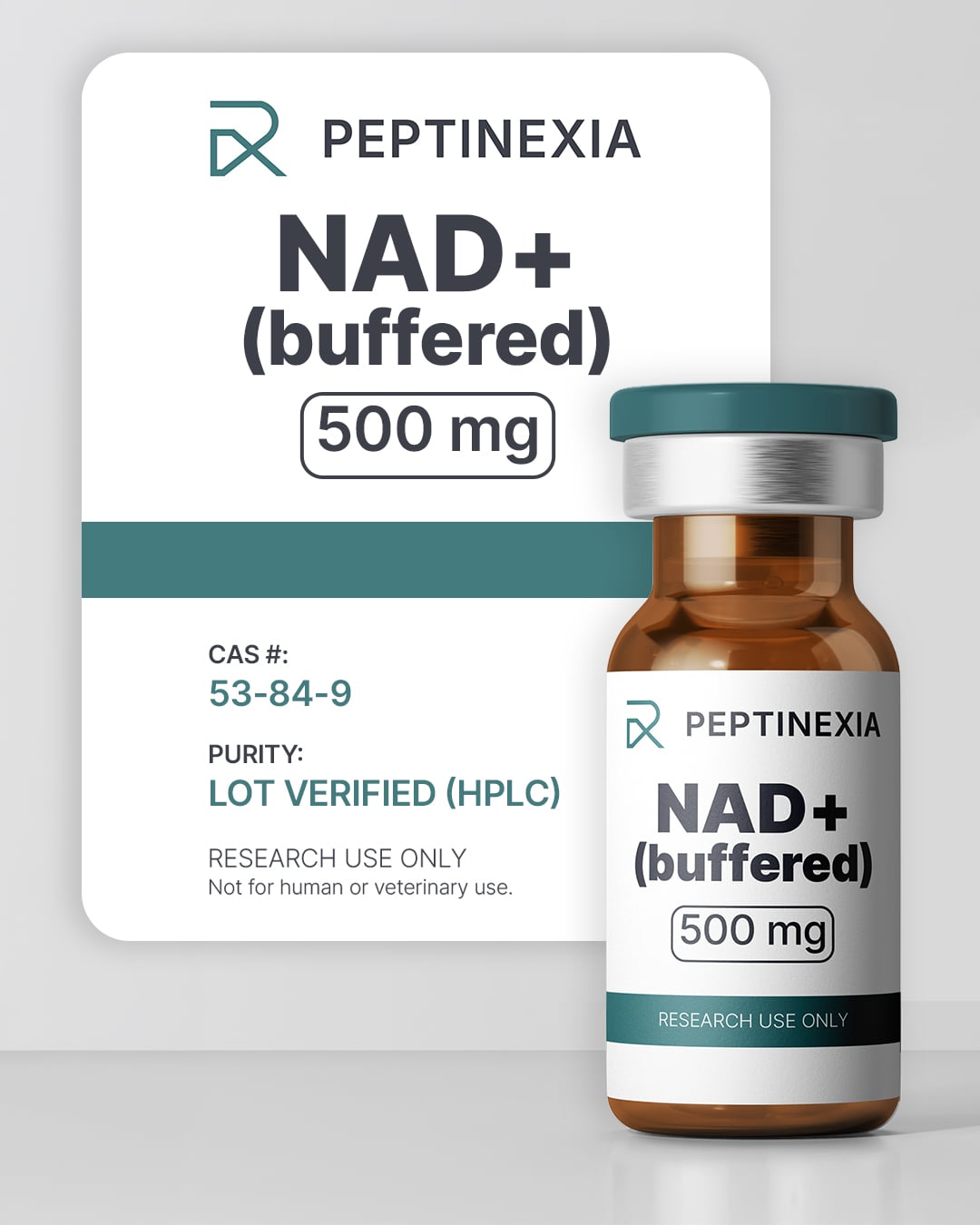
NAD+ (buffered)
NAD+ Buffered is a lyophilized nicotinamide adenine dinucleotide formulation prepared with buffering agents to support a more controlled pH during reconstitution and metabolic research applications.
Price range: $40.50 through $72.00
$40.50
1 - 4
vials
$36.45
(10% off)
5 - 9 vials
$32.40
(20% off)
10+ vials
What is NAD+ Buffered?
NAD+ Buffered is a lyophilized formulation of nicotinamide adenine dinucleotide, an essential coenzyme found in all living cells. NAD+ participates in cellular energy production, redox reactions, mitochondrial metabolism, and enzyme systems involved in DNA repair and cellular signaling.
Why is it Buffered?
Unbuffered NAD+ solutions can be noticeably acidic after reconstitution. The buffered formulation includes pH-modifying excipients intended to create a more controlled solution environment while preserving the biological identity of the NAD+ molecule.
Research Interest
NAD+ is investigated for its central role in cellular metabolism and energy transfer. Research areas include mitochondrial function, oxidative phosphorylation, metabolic regulation, cellular stress responses, DNA repair, and age-associated changes in NAD+ availability.
Mechanisms Under Investigation
NAD+ functions both as an electron-transfer coenzyme and as a substrate for enzymes including sirtuins, poly(ADP-ribose) polymerases (PARPs), and CD38. These pathways connect NAD+ availability with energy metabolism, gene regulation, DNA damage responses, and cellular adaptation to physiological stress.
Current State of Research
NAD+ biology is supported by extensive cellular and preclinical research, while direct administration and NAD+-restoration strategies remain active areas of human investigation. Current studies continue to examine pharmacokinetics, short-term tolerability, metabolic effects, and the differences between direct NAD+ administration and precursor-based approaches.
Batch Details
ID
Content
Received Date
Lot Size
vials
Crimp Color
Cap Color
Testing Lab
Lab ID
Test Date
Peptide Purity
Net Peptide Content
Peptide-to-Excipients Ratio
Endotoxin
Sterility