

| Lot ID | Purity | Net Content | Endotoxin | Sterility |
|---|---|---|---|---|
| SS30500721261 | 99.637% | 52.81 mg (105.62%) | < 0.20 EU/mL | Pass |
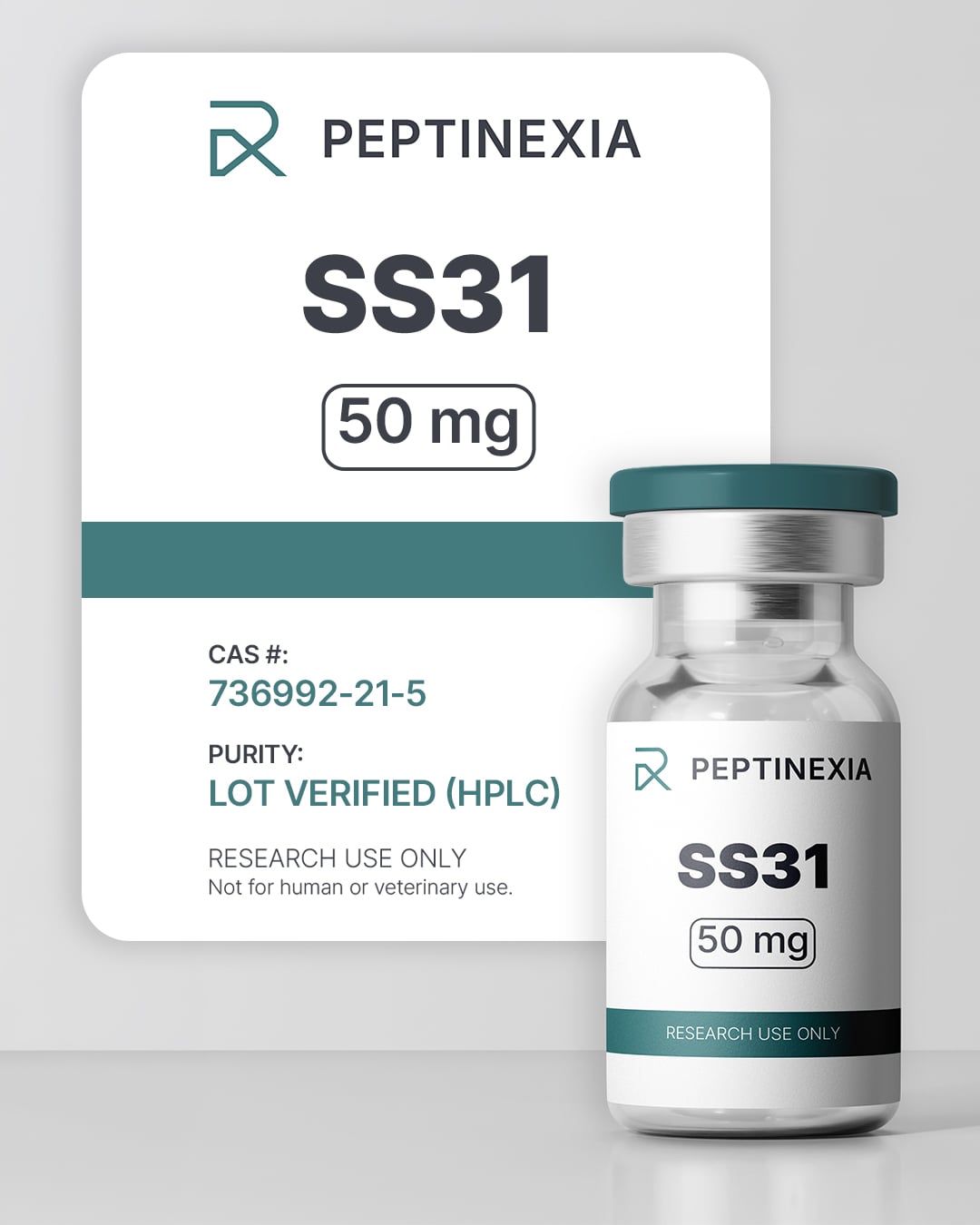
SS-31
SS-31 is a mitochondria-targeting tetrapeptide investigated for its interaction with cardiolipin and its effects on mitochondrial energy production, redox balance, and cellular stress responses.
Original price was: $100.00.$90.00Current price is: $90.00.
In stock
$90.00
1 - 4
vials
$81.00
(10% off)
5 - 9 vials
$72.00
(20% off)
10+ vials
Vial Size
50mg
What is SS-31?
SS-31, also known as elamipretide, is a synthetic mitochondria-targeting tetrapeptide with the sequence D-Arg-dimethylTyr-Lys-Phe-NH2. It is designed to concentrate at the inner mitochondrial membrane, where it interacts with cardiolipin, a phospholipid essential to mitochondrial structure and energy production.
Research Interest
SS-31 is investigated for mechanisms related to mitochondrial bioenergetics, oxidative stress, cellular resilience, and age-associated changes in energy metabolism. Research areas include electron transport chain function, ATP production, skeletal muscle energetics, ischemia-reperfusion injury, and disorders involving impaired cardiolipin biology.
Mechanisms Under Investigation
Research indicates that SS-31 binds reversibly to cardiolipin within the inner mitochondrial membrane. This interaction may help preserve membrane organization, support electron transport, limit cardiolipin oxidation, and reduce electron leakage associated with reactive oxygen species. Unlike conventional antioxidants, SS-31 is studied primarily for its direct effects on mitochondrial membrane function and bioenergetic efficiency.
Current State of Research
SS-31 has been examined in extensive preclinical research and multiple controlled human trials. In September 2025, elamipretide received accelerated FDA approval under the name Forzinity for improving muscle strength in patients with Barth syndrome weighing at least 30 kg. Clinical findings in other mitochondrial conditions have been mixed, and research continues into its effects across different genetic and physiological forms of mitochondrial dysfunction.
Batch Details
ID
Content
Received Date
Lot Size
vials
Crimp Color
Cap Color
Testing Lab
Lab ID
Test Date
Peptide Purity
Net Peptide Content
Peptide-to-Excipients Ratio
Endotoxin
Sterility