

| Lot ID | Purity | Net Content | Endotoxin | Sterility |
|---|---|---|---|---|
| CIP0100304261 | 99.9 % | 9.9 mg (98.6%) | 18.9 EU/vial | Pass |
CJC-1295 (no DAC) + Ipamorelin
CJC-1295 (no DAC) with Ipamorelin is a dual-peptide research combination investigated for coordinated growth hormone–releasing hormone (GHRH) and ghrelin receptor signaling involved in endogenous growth hormone regulation.
Original price was: $35.00.$31.50Current price is: $31.50.
In stock
$31.50
1 - 4
vials
$28.35
(10% off)
5 - 9 vials
$25.20
(20% off)
10+ vials
Vial Size
10mg
What is CJC-1295 (No DAC) with Ipamorelin?
CJC-1295 (no DAC) with Ipamorelin is a dual-peptide research combination designed to investigate coordinated stimulation of endogenous growth hormone signaling pathways. CJC-1295 (no DAC) is a modified analog of growth hormone–releasing hormone (GHRH), while Ipamorelin is a selective growth hormone secretagogue receptor (ghrelin receptor) agonist. Together, the peptides are studied for their complementary roles in regulating physiologic growth hormone release.
Research Interest
This combination is investigated in research examining neuroendocrine regulation of growth hormone secretion and downstream metabolic signaling. Areas of study include growth hormone pulsatility, insulin-like growth factor-1 (IGF-1) signaling, sleep-associated hormone release, and feedback regulation within the hypothalamic–pituitary axis. Researchers explore how simultaneous activation of distinct regulatory pathways influences coordinated endocrine signaling.
Mechanisms Under Investigation
CJC-1295 (no DAC) stimulates GHRH receptors in the anterior pituitary, promoting physiologic growth hormone release patterns. Ipamorelin activates ghrelin (GHSR-1a) receptors, enhancing growth hormone secretion through a complementary signaling pathway. Research examines how dual-pathway activation may support natural pulsatile hormone release while maintaining normal endocrine feedback regulation.
Current State of Research
Scientific investigation of GHRH analogs and growth hormone secretagogues includes extensive preclinical and human research examining endocrine signaling mechanisms. Studies continue to explore receptor selectivity, hormone pulsatility patterns, and broader physiological effects associated with coordinated neuroendocrine regulation.
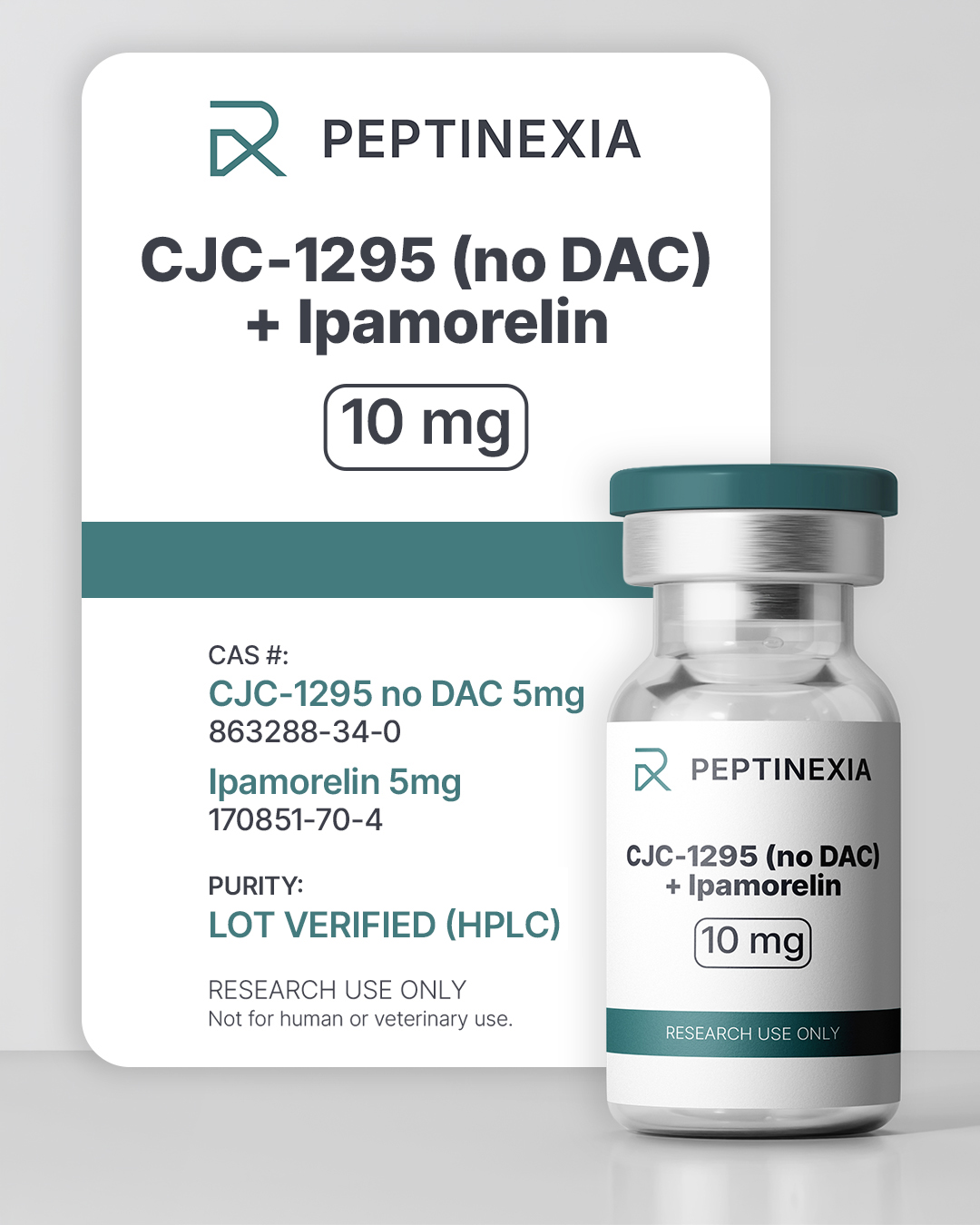
Batch Details
ID
Content
Received Date
Lot Size
vials
Crimp Color
Cap Color
Testing Lab
Lab ID
Test Date
Peptide Purity
Net Peptide Content
Peptide-to-Excipients Ratio
Endotoxin
Sterility