

| Lot ID | Purity | Net Content | Endotoxin | Sterility |
|---|---|---|---|---|
| KPV0100316261 | 99.7% | 15.1 mg (150.7 %) | 18.4 EU/vial | Pass |
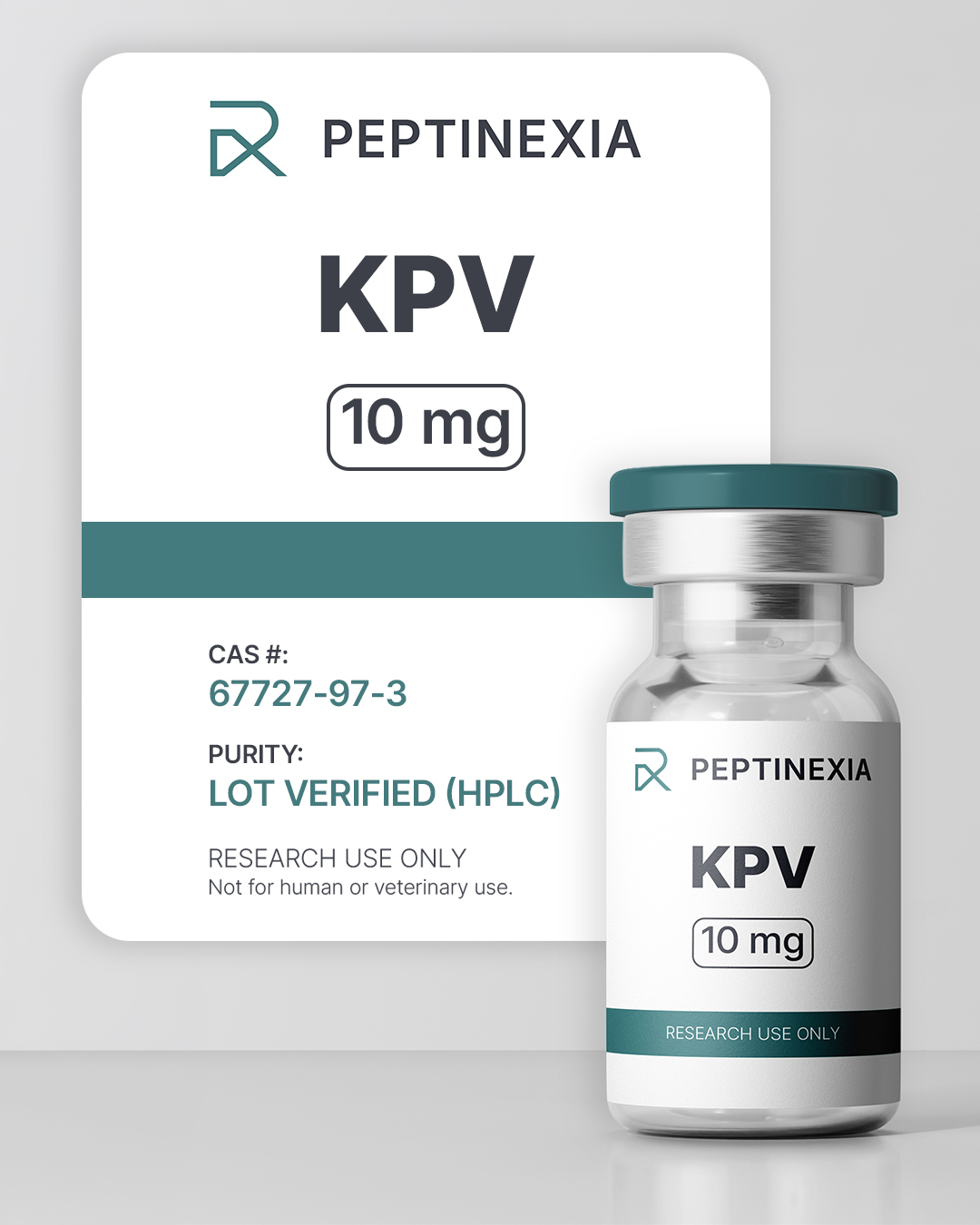
KPV
KPV is a tripeptide fragment derived from alpha-melanocyte–stimulating hormone (α-MSH) investigated for inflammatory signaling modulation and immune response regulation in preclinical research models.
$35.00
In stock
What is KPV?
KPV is a synthetic tripeptide derived from the C-terminal sequence of alpha-melanocyte–stimulating hormone (α-MSH), a naturally occurring peptide involved in immune and inflammatory signaling regulation. The peptide has been studied for its role in modulating inflammatory pathways independent of melanocortin pigmentation effects observed with the parent hormone.
Research Interest
KPV is investigated in research examining inflammatory signaling regulation and immune system responses. Areas of study include cytokine modulation, epithelial barrier function, gastrointestinal inflammatory models, and cellular responses associated with immune regulation. Researchers examine how small peptide fragments derived from endogenous signaling molecules influence inflammatory pathways.
Mechanisms Under Investigation
Studies suggest KPV may influence inflammatory signaling through melanocortin-related pathways and downstream modulation of pro-inflammatory cytokines. Research has explored its effects on nuclear factor kappa B (NF-κB) signaling and immune cell activity involved in inflammatory response regulation.
Current State of Research
Scientific literature on KPV consists primarily of preclinical and mechanistic investigations evaluating inflammatory signaling pathways across cellular and animal models. Ongoing research continues to examine its biological activity and regulatory role within immune-modulation systems.
Lyophilized (Dry Powder) — Unopened Vials
Unopened lyophilized vials should be stored away from direct light and heat. For use within a few weeks, room temperature storage is acceptable. For storage over several months, refrigeration at 2–8°C (36–46°F) is recommended. For long-term storage, freezing best preserves peptide integrity.
When removing a vial from frozen storage, allow it to reach room temperature before opening to prevent condensation from introducing moisture into the vial.
Reconstitution
Reconstitute using bacteriostatic water (BAC). Inject the solution slowly down the inside wall of the vial rather than directly onto the peptide cake. Gently swirl until fully dissolved; do not shake. Vigorous shaking may cause foaming and mechanical stress to the peptide structure.
Reconstituted Vials
After reconstitution, store vials refrigerated at 2–8°C (36–46°F) and protected from light. Always use clean, sterile technique when accessing the vial to minimize contamination.
With proper refrigerated storage and aseptic handling, reconstituted peptide solutions commonly remain stable well beyond the frequently cited 28-day guideline, which pertains to the antimicrobial effectiveness of bacteriostatic water rather than the intrinsic peptide stability. Many researchers maintaining consistent sterile technique report usable stability in the 60–90 day range under controlled conditions.
General Guidelines
- Keep vials away from excessive heat and prolonged light exposure.
- Do not freeze after reconstitution.
- Discard any solution showing cloudiness, discoloration, or visible particulate matter.
- Label vials with the reconstitution date for tracking purposes.
Study 1: Anti-Inflammatory Effects of the α-MSH Tripeptide KPV
Authors: Catania A. et al.
Source: Peptides Journal
Scientific Findings
This study investigated the anti-inflammatory activity of KPV derived from alpha-melanocyte–stimulating hormone. Researchers observed reductions in pro-inflammatory cytokine signaling and modulation of immune responses in experimental models.
Plain English Interpretation
Scientists found that the small peptide fragment KPV influenced inflammation-related signals, suggesting it plays a role in regulating how immune responses are controlled in laboratory models.
Study 2: KPV Modulates NF-κB–Mediated Inflammatory Signaling
Authors: Getting SJ et al.
Source: Journal of Immunology
Scientific Findings
Researchers demonstrated that KPV influenced inflammatory pathways through inhibition of NF-κB activation, a key regulator of cytokine production and immune signaling responses.
Plain English Interpretation
The study showed that KPV may affect a central molecular switch that controls inflammation, helping explain its role in immune signaling research.
Study 3: Alpha-MSH Peptides and Regulation of Intestinal Inflammation
Authors: Rajora N. et al.
Source: Journal of Immunology
Scientific Findings
This research examined melanocortin-derived peptides in experimental intestinal inflammation models. Findings demonstrated reduced inflammatory activity and modulation of immune signaling pathways associated with epithelial tissue responses.
Plain English Interpretation
Researchers studying inflammation in digestive tissues observed that peptides related to KPV influenced immune signaling and reduced inflammatory responses in laboratory models.
Study 4: Melanocortin Peptides as Regulators of Immune and Inflammatory Responses
Authors: Catania A., Lipton JM.
Source: Endocrine Reviews
Scientific Findings
This review summarized the role of melanocortin peptides in immune regulation, describing anti-inflammatory signaling mechanisms mediated by α-MSH–derived peptides including KPV.
Plain English Interpretation
Scientists reviewed how naturally occurring melanocortin peptides help regulate inflammation, providing biological context for research involving KPV.

