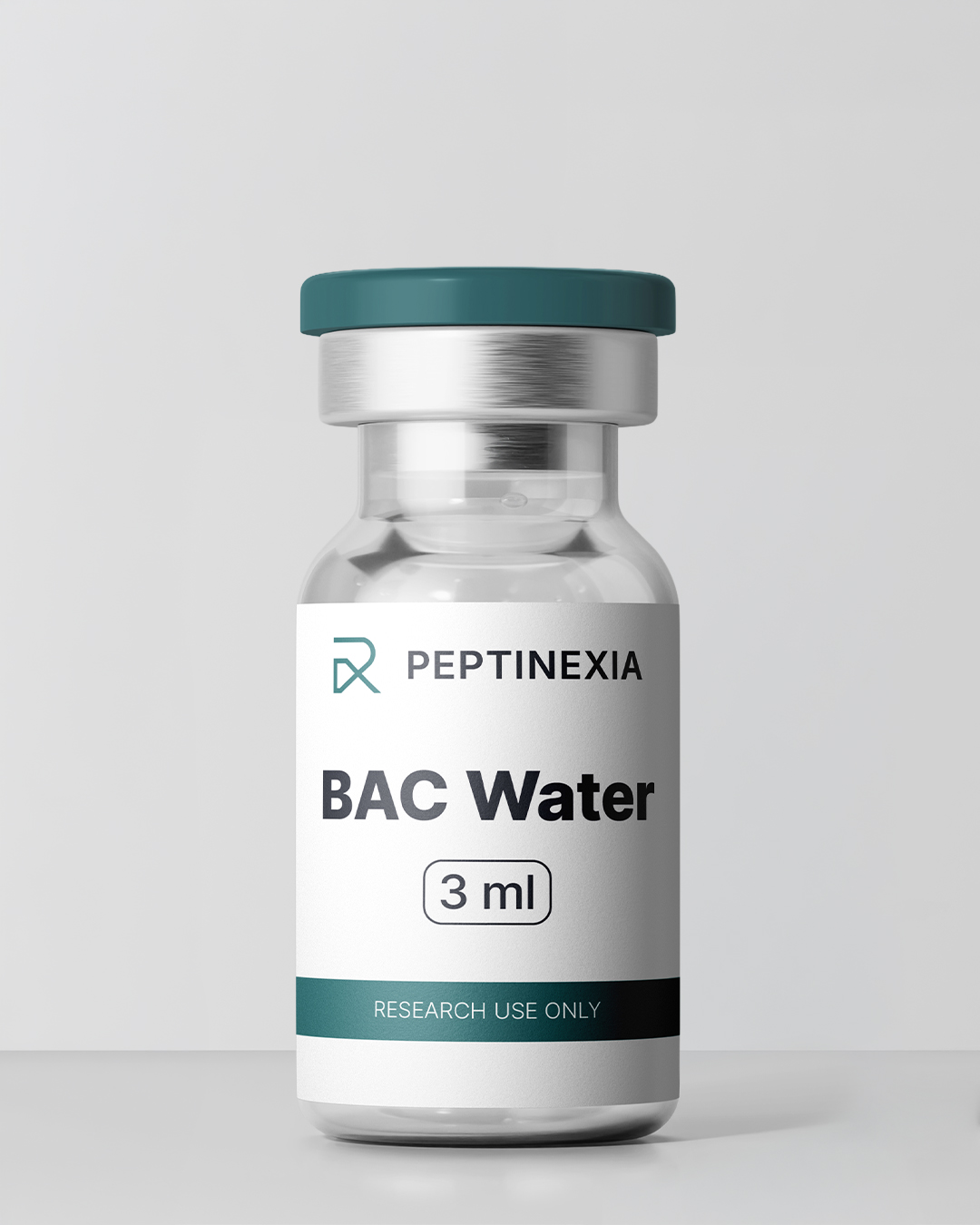
What is Bacteriostatic Water?
Bacteriostatic Water is a sterile, non-pyrogenic water preparation containing 0.9% benzyl alcohol as a preservative. It is commonly used as a diluent for reconstitution of lyophilized compounds in research settings where repeated vial access may occur. The preservative helps inhibit bacterial growth during multi-dose handling.
Research Use
Bacteriostatic Water is used for dissolving or diluting research compounds prior to experimental preparation. The inclusion of benzyl alcohol allows multiple withdrawals from a single vial when handled using proper sterile technique, making it suitable for multi-use laboratory applications.
Handling Characteristics
The solution is isotonic and sterile-filtered, designed to provide a stable aqueous environment for reconstitution. Researchers select bacteriostatic water when antimicrobial preservation is desired during repeated handling, while maintaining compatibility with a wide range of peptides and research compounds.
Current Use Context
Bacteriostatic Water is widely utilized in laboratory and research environments as a standard diluent for lyophilized materials. Selection of diluent should be based on compound-specific requirements and experimental design considerations.