

What is ARA-290?
ARA-290, also known as cibinetide, is a synthetic peptide derived from the structure of erythropoietin (EPO). Unlike erythropoietin, ARA-290 does not stimulate red blood cell production but is designed to selectively activate the innate repair receptor (IRR), a signaling complex associated with cellular protection and inflammatory regulation. The peptide has been investigated in both preclinical and human research models examining tissue-protective signaling mechanisms.
Research Interest
ARA-290 is studied for biological processes related to inflammatory modulation, cellular stress responses, and tissue protection. Research areas include neuropathic signaling pathways, metabolic inflammation, vascular function, and recovery responses following cellular injury. Investigators examine how selective activation of innate repair signaling pathways influences coordinated biological adaptation without hematopoietic effects.
Mechanisms Under Investigation
Research suggests ARA-290 activates the innate repair receptor complex, triggering downstream pathways involved in anti-inflammatory signaling, mitochondrial protection, and cellular survival responses. Studies have explored its effects on cytokine regulation, neural signaling pathways, and microvascular function associated with tissue stress and recovery models.
Current State of Research
ARA-290 has been evaluated in multiple preclinical investigations and early-phase human clinical studies examining inflammatory and neurological signaling outcomes. Ongoing research continues to explore its pharmacology, receptor selectivity, and broader implications for tissue-protective signaling mechanisms.
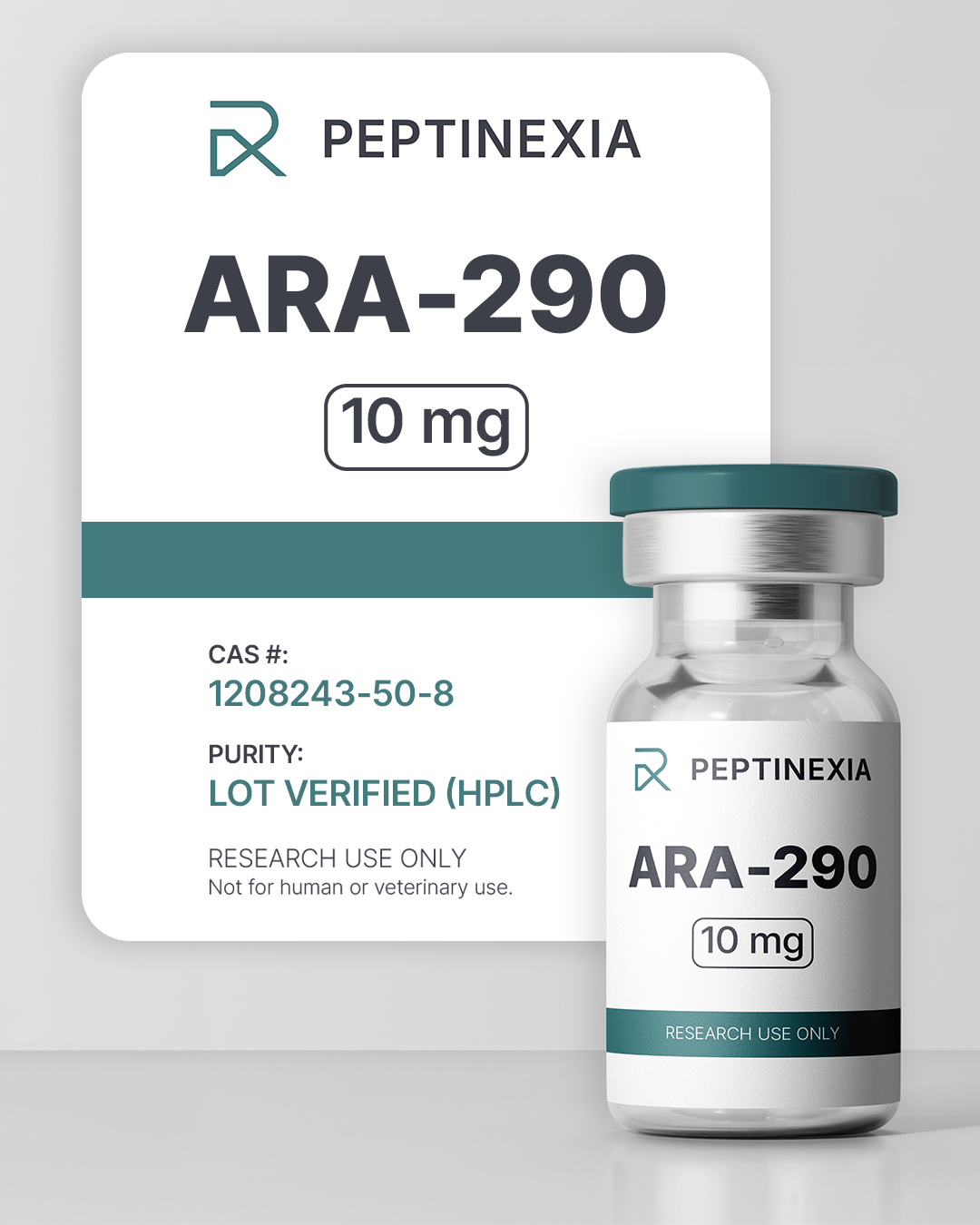
Lyophilized (Dry Powder) — Unopened Vials
Unopened lyophilized vials should be stored away from direct light and heat. For short-term storage, room temperature conditions are acceptable. For storage over several months, refrigeration at 2–8°C (36–46°F) is recommended. For long-term preservation, freezing provides optimal peptide stability.
When removing a vial from frozen storage, allow it to reach room temperature before opening to prevent condensation from introducing moisture into the vial.
Reconstitution
ARA-290 is commonly reconstituted using sterile phosphate-buffered saline (PBS) or sterile saline solution. Buffered solutions help maintain physiological pH conditions consistent with published research preparation methods.
Inject the solution slowly down the inside wall of the vial rather than directly onto the peptide cake. Allow the powder to dissolve naturally and gently swirl if needed. Do not shake, as vigorous agitation may introduce foaming or mechanical stress to the peptide structure.
Reconstituted Vials
After reconstitution, store vials refrigerated at 2–8°C (36–46°F) and protected from light. Use clean sterile technique when accessing the vial to minimize contamination.
When properly refrigerated and handled aseptically, reconstituted solutions are commonly maintained for extended research use. Stability depends primarily on storage consistency and handling practices rather than a fixed time interval.
General Guidelines
- Keep vials protected from excessive heat and prolonged light exposure.
- Do not freeze after reconstitution.
- Discard solutions showing cloudiness, discoloration, or visible particulate matter.
- Label each vial with the reconstitution date for reference.
Study 1: ARA-290 Activates the Innate Repair Receptor Without Erythropoietic Activity
Authors: Brines M. et al.
Source: Proceedings of the National Academy of Sciences (PNAS)
Scientific Findings
This foundational study identified ARA-290 as a peptide derived from erythropoietin capable of selectively activating the innate repair receptor (IRR) without stimulating red blood cell production. Experimental models demonstrated tissue-protective signaling and reduced inflammatory responses independent of hematopoietic pathways.
Plain English Interpretation
Researchers developed ARA-290 to activate protective cellular signaling normally associated with erythropoietin while avoiding effects on red blood cell production. The study showed the peptide could trigger repair-related pathways without altering blood formation.
Study 2: Cibinetide Improves Small Fiber Nerve Function in Human Clinical Research
Authors: Brines M. et al.
Source: Diabetes Care
Scientific Findings
This randomized clinical study evaluated cibinetide (ARA-290) in participants with small fiber neuropathy. Investigators observed improvements in measures of nerve fiber function and symptom-related outcomes compared with placebo, supporting the role of innate repair receptor signaling in neural tissue regulation.
Plain English Interpretation
In a human study, researchers found that ARA-290 influenced markers related to nerve function, suggesting activation of repair signaling pathways may affect nerve-related biological processes.
Study 3: ARA-290 Modulates Inflammatory Signaling and Metabolic Function
Authors: Dahan A. et al.
Source: Molecular Medicine
Scientific Findings
This clinical investigation examined inflammatory and metabolic markers following ARA-290 administration. Results indicated modulation of inflammatory signaling pathways alongside changes in metabolic regulatory markers, supporting the peptide’s role in innate repair signaling biology.
Plain English Interpretation
Researchers observed changes in inflammation-related signals and metabolic markers in human participants, suggesting the peptide may influence how the body responds to cellular stress.
Study 4: Innate Repair Receptor Signaling and Tissue Protection Mechanisms
Authors: Brines M., Cerami A.
Source: Nature Reviews Drug Discovery
Scientific Findings
This review summarized the biology of the innate repair receptor and its role in tissue protection and inflammatory regulation. The authors described how non-erythropoietic EPO derivatives such as ARA-290 selectively activate protective signaling pathways involved in cellular survival and recovery responses.
Plain English Interpretation
Scientists reviewed how specialized repair receptors help cells respond to stress and injury. ARA-290 was designed to activate these protective signals without affecting red blood cell production.