

| Lot ID | Purity | Net Content | Endotoxin | Sterility |
|---|---|---|---|---|
| CIP0100304261 | 99.9 % | 9.9 mg (98.6%) | 18.9 EU/vial | Pass |
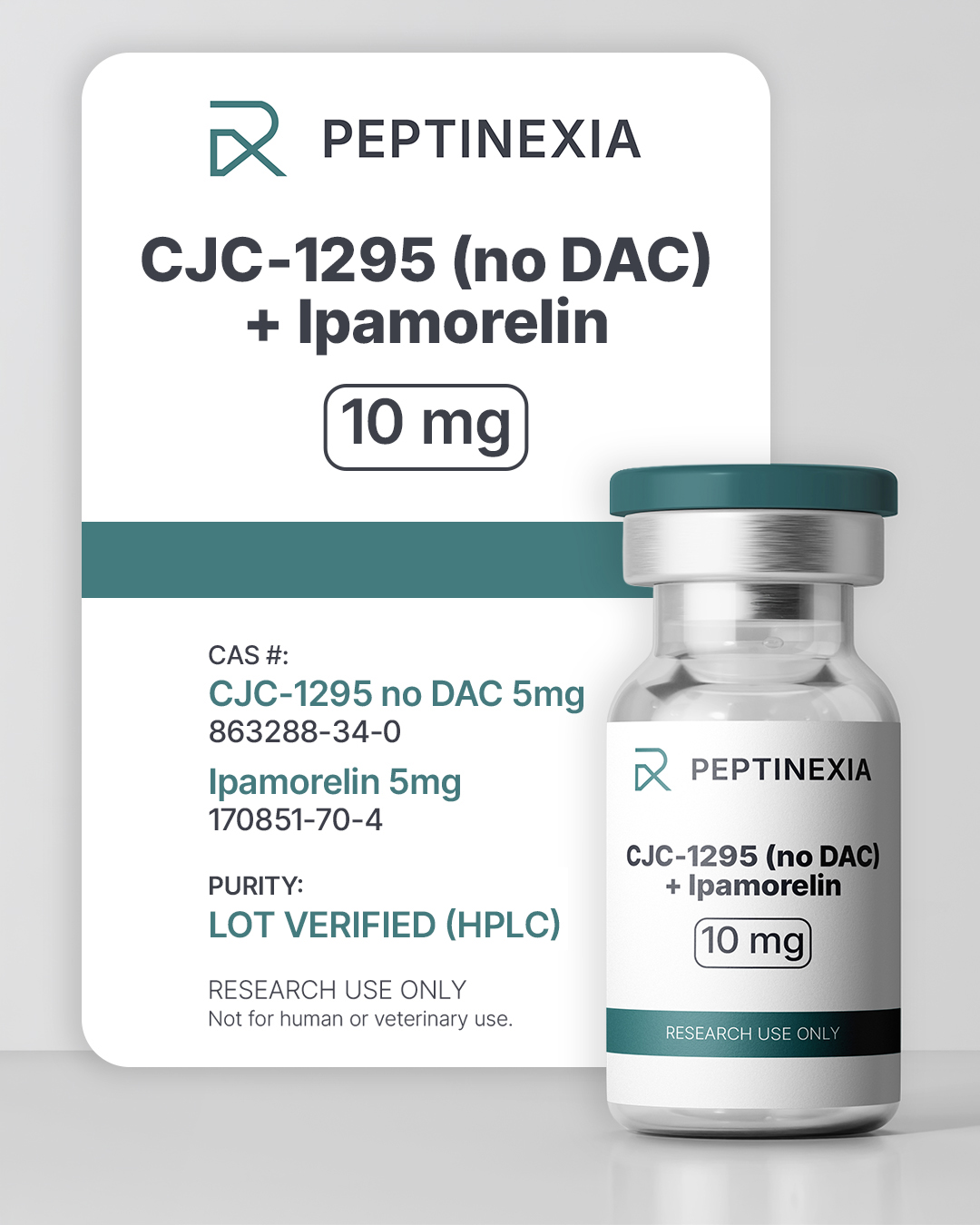
CJC-1295 (no DAC) + Ipamorelin
CJC-1295 (no DAC) with Ipamorelin is a dual-peptide research combination investigated for coordinated growth hormone–releasing hormone (GHRH) and ghrelin receptor signaling involved in endogenous growth hormone regulation.
$60.00
In stock
What is CJC-1295 (No DAC) with Ipamorelin?
CJC-1295 (no DAC) with Ipamorelin is a dual-peptide research combination designed to investigate coordinated stimulation of endogenous growth hormone signaling pathways. CJC-1295 (no DAC) is a modified analog of growth hormone–releasing hormone (GHRH), while Ipamorelin is a selective growth hormone secretagogue receptor (ghrelin receptor) agonist. Together, the peptides are studied for their complementary roles in regulating physiologic growth hormone release.
Research Interest
This combination is investigated in research examining neuroendocrine regulation of growth hormone secretion and downstream metabolic signaling. Areas of study include growth hormone pulsatility, insulin-like growth factor-1 (IGF-1) signaling, sleep-associated hormone release, and feedback regulation within the hypothalamic–pituitary axis. Researchers explore how simultaneous activation of distinct regulatory pathways influences coordinated endocrine signaling.
Mechanisms Under Investigation
CJC-1295 (no DAC) stimulates GHRH receptors in the anterior pituitary, promoting physiologic growth hormone release patterns. Ipamorelin activates ghrelin (GHSR-1a) receptors, enhancing growth hormone secretion through a complementary signaling pathway. Research examines how dual-pathway activation may support natural pulsatile hormone release while maintaining normal endocrine feedback regulation.
Current State of Research
Scientific investigation of GHRH analogs and growth hormone secretagogues includes extensive preclinical and human research examining endocrine signaling mechanisms. Studies continue to explore receptor selectivity, hormone pulsatility patterns, and broader physiological effects associated with coordinated neuroendocrine regulation.
Lyophilized (Dry Powder) — Unopened Vials
Unopened lyophilized vials should be stored away from direct light and heat. For use within a few weeks, room temperature storage is acceptable. For storage over several months, refrigeration at 2–8°C (36–46°F) is recommended. For long-term storage, freezing best preserves peptide integrity.
When removing a vial from frozen storage, allow it to reach room temperature before opening to prevent condensation from introducing moisture into the vial.
Reconstitution
Reconstitute using bacteriostatic water (BAC). Inject the solution slowly down the inside wall of the vial rather than directly onto the peptide cake. Gently swirl until fully dissolved; do not shake. Vigorous shaking may cause foaming and mechanical stress to the peptide structure.
Reconstituted Vials
After reconstitution, store vials refrigerated at 2–8°C (36–46°F) and protected from light. Always use clean, sterile technique when accessing the vial to minimize contamination.
With proper refrigerated storage and aseptic handling, reconstituted peptide solutions commonly remain stable well beyond the frequently cited 28-day guideline, which pertains to the antimicrobial effectiveness of bacteriostatic water rather than the intrinsic peptide stability. Many researchers maintaining consistent sterile technique report usable stability in the 60–90 day range under controlled conditions.
General Guidelines
- Keep vials away from excessive heat and prolonged light exposure.
- Do not freeze after reconstitution.
- Discard any solution showing cloudiness, discoloration, or visible particulate matter.
- Label vials with the reconstitution date for tracking purposes.
Study 1: Growth Hormone–Releasing Hormone Analog CJC-1295 Increases Endogenous Growth Hormone Secretion
Authors: Teichman SL et al.
Source: Journal of Clinical Endocrinology & Metabolism
Scientific Findings
Clinical investigation demonstrated that CJC-1295 increased growth hormone and IGF-1 levels through receptor-mediated stimulation of physiologic endocrine pathways. Observed effects reflected enhanced endogenous hormone release rather than direct hormone administration.
Plain English Interpretation
Researchers found that CJC-1295 stimulated the body’s natural growth hormone signaling system by activating upstream regulatory receptors in the pituitary gland.
Study 2: Selective Growth Hormone Secretagogue Activity of Ipamorelin
Authors: Raun K et al.
Source: European Journal of Endocrinology
Scientific Findings
Ipamorelin demonstrated selective activation of growth hormone secretagogue receptors with minimal activity on other endocrine pathways. Studies showed stimulation of growth hormone release through ghrelin receptor signaling mechanisms.
Plain English Interpretation
Scientists observed that Ipamorelin activates receptors involved in growth hormone release while maintaining selectivity compared with earlier secretagogue compounds.
Study 3: Dual Regulation of Growth Hormone Secretion via GHRH and Ghrelin Pathways
Authors: Kojima M., Kangawa K.
Source: Physiological Reviews
Scientific Findings
This review examined the complementary roles of GHRH and ghrelin signaling in regulating growth hormone pulsatility. Findings demonstrated that coordinated activation of both pathways contributes to physiologic hormone release patterns controlled by hypothalamic–pituitary feedback mechanisms.
Plain English Interpretation
Researchers showed that growth hormone release is naturally controlled by two signaling systems working together, helping explain why studies often examine both pathways simultaneously.
Study 4: Neuroendocrine Regulation of Growth Hormone Pulsatility
Authors: Müller EE et al.
Source: Endocrine Reviews
Scientific Findings
This review summarized regulatory mechanisms controlling pulsatile growth hormone secretion, including hypothalamic signaling and feedback regulation. The work provides physiological context for research involving GHRH analogs and growth hormone secretagogues.
Plain English Interpretation
Scientists reviewed how the brain naturally controls growth hormone release in pulses, offering insight into how peptides that stimulate these pathways are studied in endocrine research.

