

| Lot ID | Purity | Net Content | Endotoxin | Sterility |
|---|---|---|---|---|
| GHK1000316261 | 99.7 % | 95.3 mg (95.3 %) | 34 EU/vial | Pass |
| GHK0500316261 | 99.7 % | 47.3 mg (94.7 %) | 38.9 EU/vial | Pass |
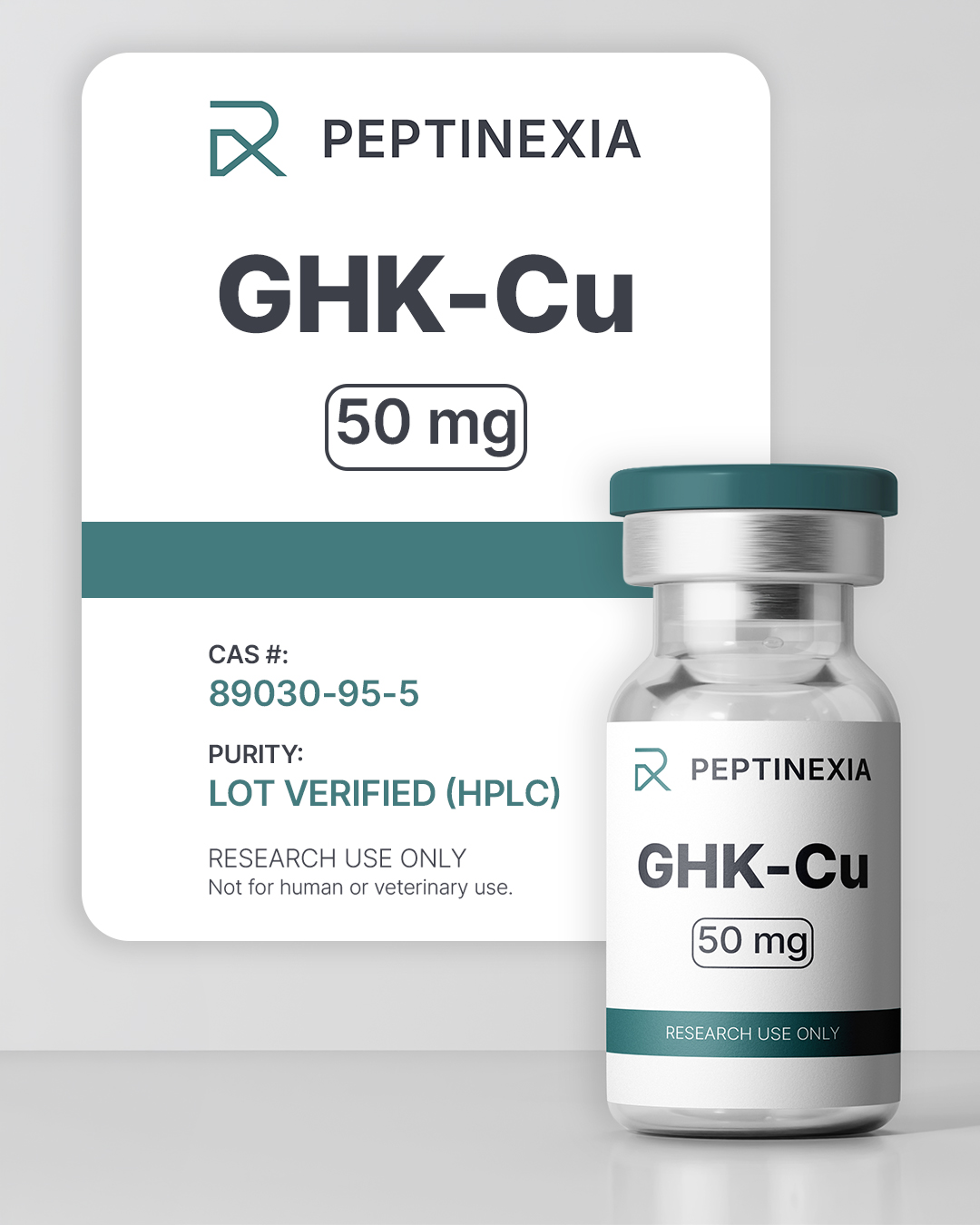
GHK-Cu
GHK-Cu is a copper-binding tripeptide complex investigated for its role in cellular signaling, tissue remodeling, and extracellular matrix regulation in preclinical research models.
Price range: $15.00 through $36.00
$15.00
1 - 4
vials
$13.50
(10% off)
5 - 9 vials
$12.00
(20% off)
10+ vials
What is GHK-Cu?
GHK-Cu is a naturally occurring copper-binding tripeptide composed of glycyl-L-histidyl-L-lysine complexed with copper ions. First identified in human plasma, the peptide is present in multiple tissues and has been studied for its involvement in cellular signaling, tissue remodeling, and extracellular matrix regulation in preclinical research models.
Research Interest
GHK-Cu is investigated for biological mechanisms related to tissue maintenance and repair processes. Areas of study include collagen and extracellular matrix regulation, cellular differentiation, inflammatory signaling modulation, and gene expression pathways associated with tissue remodeling. Researchers examine how copper-peptide signaling influences coordinated cellular responses within aging and injury-related models.
Mechanisms Under Investigation
Research suggests GHK-Cu may function as a signaling molecule capable of influencing gene expression and protein synthesis involved in structural tissue organization. Studies have explored its interaction with copper-dependent enzymatic systems, extracellular matrix turnover, and pathways regulating collagen production and cellular regeneration processes.
Current State of Research
Scientific literature on GHK-Cu includes extensive preclinical investigation across dermatological, connective tissue, and cellular biology models. Ongoing research continues to examine its signaling activity, biological distribution, and regulatory roles within tissue remodeling systems. Human research remains limited and continues to evolve alongside mechanistic studies.
Batch Details
ID
Content
Received Date
Lot Size
vials
Crimp Color
Cap Color
Testing Lab
Lab ID
Test Date
Peptide Purity
Net Peptide Content
Peptide-to-Excipients Ratio
Endotoxin
Sterility