

| Lot ID | Purity | Net Content | Endotoxin | Sterility |
|---|---|---|---|---|
| MOT0400616261 | 99.456% | 41.14 mg (102.85%) | < 0.20 EU/mL | Pass |
| MOT0100612261 | 99.727% | 8.70 mg (87%) | < 0.20 EU/mL | Pass |
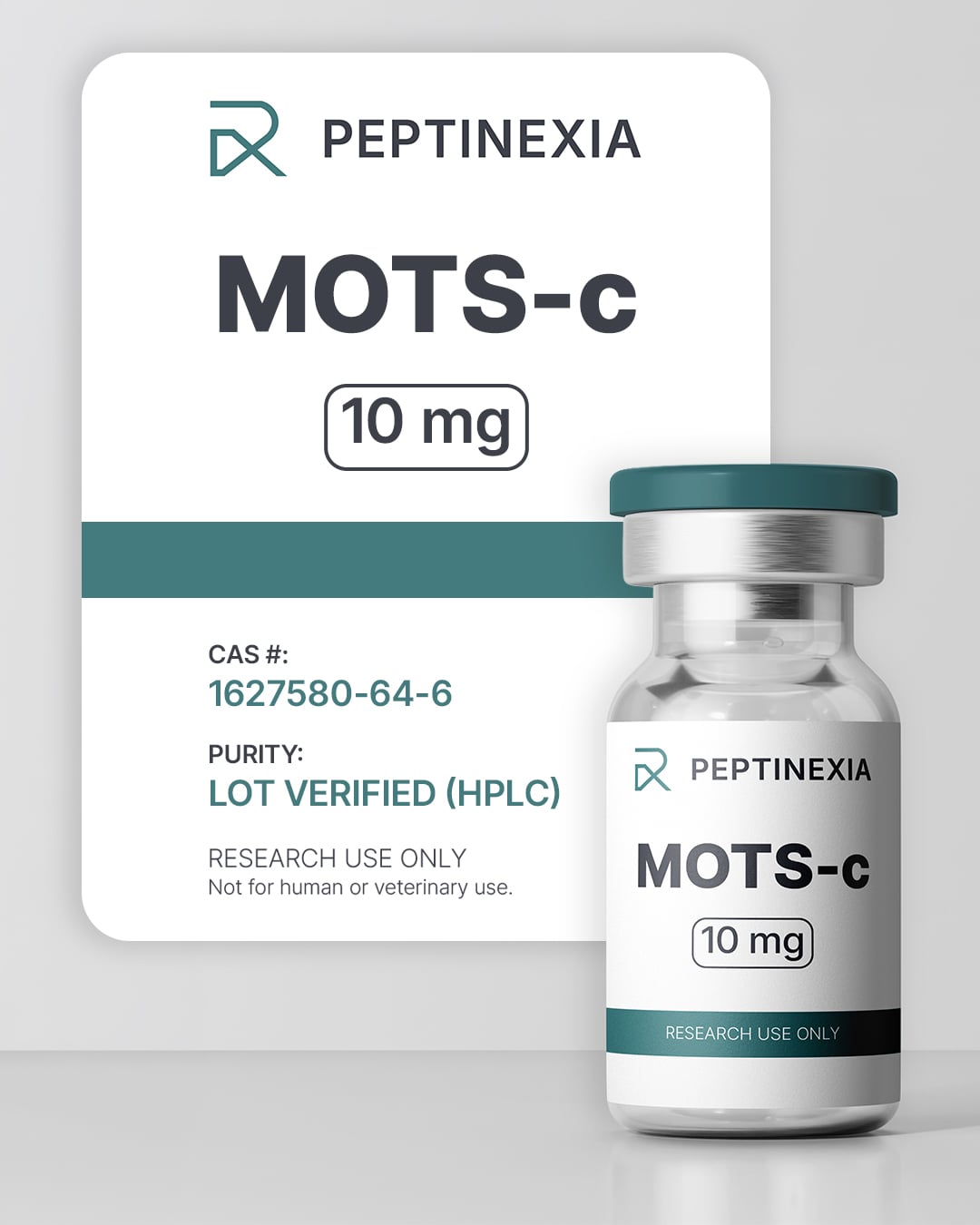
MOTS-c
MOTS-c is a mitochondrial-derived peptide investigated for its role in metabolic regulation, cellular energy signaling, and stress-response pathways in preclinical and human research models.
Price range: $24.00 through $63.00
$24.00
1 - 4
vials
$21.60
(10% off)
5 - 9 vials
$19.20
(20% off)
10+ vials
What is MOTS-c?
MOTS-c is a mitochondrial-derived peptide encoded within mitochondrial DNA and naturally produced in cells as part of metabolic signaling processes. Unlike most peptides encoded by nuclear genes, MOTS-c originates from the mitochondrial genome and has been studied for its role in regulating cellular energy balance and adaptive stress responses in both preclinical and human research models.
Research Interest
MOTS-c is investigated for mechanisms related to metabolic regulation and cellular adaptation to energetic stress. Research areas include glucose metabolism, insulin signaling pathways, mitochondrial function, exercise-related metabolic responses, and age-associated changes in metabolic homeostasis. Scientists examine how mitochondrial signaling peptides coordinate communication between cellular energy status and nuclear gene expression.
Mechanisms Under Investigation
Studies suggest MOTS-c may influence metabolic pathways through activation of AMP-activated protein kinase (AMPK) and regulation of genes involved in energy utilization and stress resistance. Research has shown that MOTS-c can translocate to the nucleus under metabolic stress conditions, where it may help regulate adaptive cellular responses linking mitochondrial activity with genomic signaling pathways.
Current State of Research
Scientific investigation of MOTS-c includes both preclinical studies and early human research examining metabolic and physiological signaling effects. Ongoing research continues to explore its role as a mitochondrial signaling peptide and its broader implications for metabolic regulation and cellular adaptation mechanisms.
Batch Details
ID
Content
Received Date
Lot Size
vials
Crimp Color
Cap Color
Testing Lab
Lab ID
Test Date
Peptide Purity
Net Peptide Content
Peptide-to-Excipients Ratio
Endotoxin
Sterility