

| Lot ID | Purity | Net Content | Endotoxin | Sterility |
|---|---|---|---|---|
| TB50100316261 | 99.7 % | 11.1 mg (111.3 %) | 19.7 EU/vial | Pass |
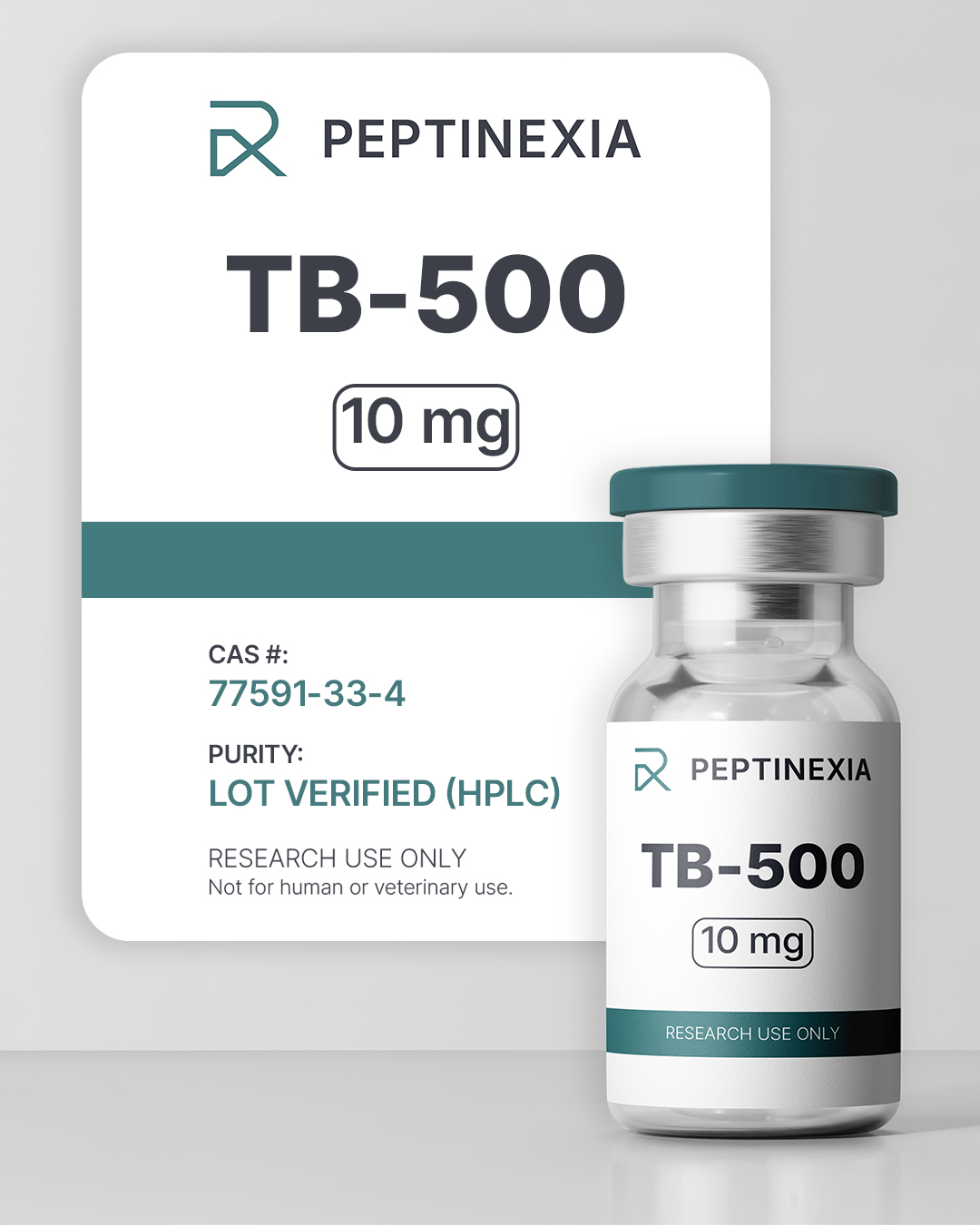
TB-500
TB-500 is a synthetic form of thymosin beta-4 investigated for its role in actin regulation, cellular migration, and tissue remodeling processes in preclinical research models.
Original price was: $45.00.$40.50Current price is: $40.50.
In stock
$40.50
1 - 4
vials
$36.45
(10% off)
5 - 9 vials
$32.40
(20% off)
10+ vials
Vial Size
10mg
What is TB-500?
TB-500 is a synthetic form of thymosin beta-4 (TB4), a naturally occurring peptide widely distributed throughout mammalian tissues. Thymosin beta-4 participates in cellular processes involving actin regulation, cell migration, and tissue remodeling, and has been extensively studied in preclinical research investigating biological repair and regenerative signaling mechanisms.
Research Interest
TB-500 is investigated in research settings for mechanisms associated with tissue repair and cellular responses to injury. Areas of study include cell migration, angiogenesis, inflammatory signaling, and connective tissue remodeling. Researchers examine how thymosin beta-4 influences coordinated cellular movement and structural organization during biological recovery processes.
Mechanisms Under Investigation
Thymosin beta-4 binds actin, a structural protein essential for maintaining cell shape and enabling cellular movement. Research explores how modulation of actin dynamics affects cellular migration, blood vessel formation, and tissue remodeling pathways. These mechanisms are primarily studied in laboratory and animal models examining coordinated repair and regenerative signaling systems.
Current State of Research
Scientific literature on thymosin beta-4 includes extensive preclinical investigation across multiple tissue systems, with ongoing research focused on clarifying its signaling roles, biological distribution, and regulatory effects within cellular repair pathways. Human clinical research remains limited, and investigation into its broader biological activity is ongoing.
Batch Details
ID
Content
Received Date
Lot Size
vials
Crimp Color
Cap Color
Testing Lab
Lab ID
Test Date
Peptide Purity
Net Peptide Content
Peptide-to-Excipients Ratio
Endotoxin
Sterility